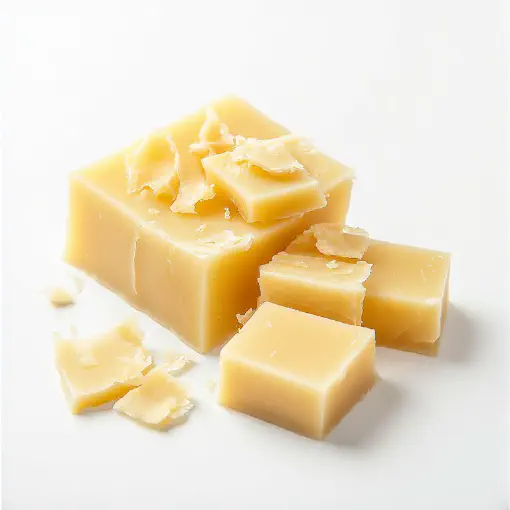
Palm wax is a natural, biodegradable wax derived from the oil of palm berries. It has become a favourite in the candle-making world, specifically for its unique aesthetic and eco-friendly profile. Palm wax is particularly prized for its unique aesthetic and clean-burning properties.
Characteristics
-
Crystalline Finish:
One of its most distinctive features is the “feathering” or “marbling” effect. As the wax cools, it forms beautiful, intricate crystal patterns on the surface, making every candle unique.
-
High Melting Point:
Palm wax is harder and has a higher melting point than soy wax. This makes it excellent for pillar candles and wax melts, as it holds its shape well in warmer environments.
-
Clean Burn:
When wicked correctly, it produces minimal soot and smoke, offering a “cleaner” burn compared to petroleum-based waxes.
-
Scent Throw:
It has an excellent “fragrance load,” meaning it can hold and release scents effectively, both when the candle is cold and when it is lit.
Note: It’s important to note that palm wax can come in different grades with slight variations in certain physical properties. These properties can also be influenced by factors such as processing methods and storage conditions.
Applications
Palm wax is a versatile material frequently used in various craft and industrial sectors. Because it is a natural, plant-based product, it is often marketed as a “sustainable” alternative to paraffin wax. The primary applications for palm wax are shown below:
-
Candle making (Chandlery):
This is the most common use for palm wax. It is highly prized by artisan candle makers for its unique aesthetic and structural properties.
-
Pillar Candles:
Due to its hardness and high melting point, it is excellent for free-standing candles (pillar candles) as it maintains its shape well in warmer environments.
-
Cosmetics:
Used as a thickening agent in lip balms, lipsticks, lotions, moisturisers, and hair styling products.
-
Polishes:
Included in some wood and furniture polishes for a high-gloss finish, car waxes, surfboard wax and others.
-
Food Industry:
Sometimes used as a glazing agent (though this is more common in its oil form).
-
Confectionery:
Giving sweets and chocolates a glossy, professional finish.
-
Fruit Coating:
A thin layer may be applied to citrus fruits or apples to prevent moisture loss and improve shelf life.
Consumers and manufacturers place a heavy emphasis on the environmental impact of palm oil. Because traditional palm oil production has been linked to deforestation. We supply RSPO-certified (Roundtable on Sustainable Palm Oil) palm wax SG fully segregated for high level of traceability and sustainable from origin.