

The Tyre industry focuses on the production of tires for various vehicles, spanning automobiles, trucks, and motorcycles. It involves advanced engineering to optimize tire performance, safety, and fuel efficiency, addressing factors like tread design, rubber composition, and structural integrity. The industry is influenced by technological innovations, sustainability concerns, and market demands for improved handling, longevity, and environmental impact.
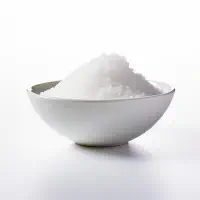
Palm stearic acid is a type of fatty acid derived from palm oil. It is obtained through the process of separating and crystallizing the fatty acids from palm oil. Stearic acid is a saturated fatty acid known for its stability and solid form at room temperature. Palm stearic acid has a waxy appearance and can range in color from white to slightly yellow. It has a low melting point, typically between 55-70 degrees Celsius (131-158 degrees Fahrenheit), which allows it to be easily incorporated into various formulations.
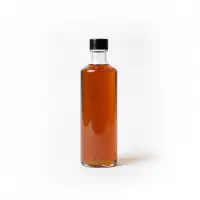
Distilled Cashew Nut Shell Liquid (CNSL) is a versatile, bio-based raw material used extensively in industrial chemistry. It is a natural source of cardanol, a substituted phenol that offers a sustainable alternative to petroleum-derived products. Characteristics Appearance: A clear, pale-yellow to reddish-brown oily liquid. Unlike the crude version, the distilled variant is significantly lighter in colour. Odour: Characteristically phenolic, though less intense than crude CNSL. Composition: Primarily consists of cardanol (typically >90%), a monohydric phenol with a long 15-carbon unsaturated side chain.
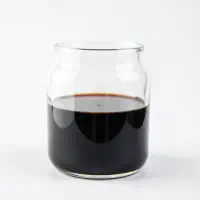
Degummed Cashew Nut Shell Liquid (CNSL) is a versatile, non-edible byproduct of the cashew processing industry. While raw CNSL contains high levels of gums and impurities, the degumming process refines the liquid, making it a valuable industrial raw material, particularly in the green chemical sector. Characteristics Appearance: A dark reddish-brown, viscous liquid. Odour: Characteristic phenolic, slightly acrid scent. Solubility: Soluble in most organic solvents; insoluble in water. Specific gravity: Typically ranges between 0.
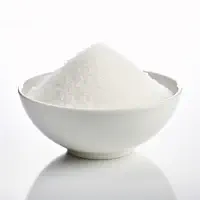
Fischer-Tropsch wax, also known as FT wax, is a petroleum-derived wax produced through the Fischer-Tropsch process. It exhibits the following physical features: Characteristics Appearance: Fischer-Tropsch wax is a hard, solid substance at room temperature. It is typically found as white or off-white flakes, pellets, or powders. Melting Point: The melting point of FT wax can vary depending on the specific composition, but it generally ranges between 45°C (113°F) and 100°C (212°F).

Anti-ozone wax, also known as ozone-resistant wax or ozone protector wax, is a specialized wax that is used to protect rubber and other elastomers from the degrading effects of ozone exposure. While the specific composition of anti-ozone waxes may vary, they generally exhibit the following physical features: Characteristics Appearance: Anti-ozone waxes are typically solid materials at room temperature, commonly available in the form of flakes, pellets, or blocks. Melting Point: The melting point of anti-ozone wax can vary depending on the specific formulation, but it is typically in the range of 60°C (140°F) to 100°C (212°F).
For a consultation call us today at
+44 20 7101 3847
Bio Greenware Ltd ®